
DaNang Travel Guide: Beaches, Mountains, Food & Central Vietnam Highlights
Discover the best of Da Nang, from My Khe Beach and Marble Mountains to Son Tra Peninsula, local food and easy day trips. Our guide covers what to see, where to stay, when to visit and practical travel tips.
Updated
Set between a long sweep of sandy coastline and the mountains of Central Vietnam, Da Nang combines city convenience with an easy-going beach lifestyle. Wide beaches, excellent seafood, dramatic coastal scenery and a growing café and restaurant scene make it an appealing destination in its own right, while its central location also puts some of Vietnam’s most famous cultural attractions within easy reach.
Da Nang is especially useful for travellers who want a little of everything. You can spend the morning on the beach, explore caves and pagodas in the afternoon, eat fresh seafood beside the sea and still be close enough to visit Hoi An, Hue or the Hai Van Pass as part of the same trip.
Why Visit Da Nang?
Da Nang offers a different experience from Vietnam’s two biggest cities.
It is more relaxed than Hanoi or Ho Chi Minh City, yet still has plenty of restaurants, nightlife, shopping and modern hotels. The city stretches along the Han River and towards a broad coastline where My Khe and neighbouring beaches form one of its biggest attractions.
For first-time visitors to Central Vietnam, Da Nang also works extremely well as a base. Hoi An is within easy reach to the south, Hue can be visited via the spectacular Hai Van Pass, and attractions such as Marble Mountains, Son Tra Peninsula and Ba Na Hills can all be explored from the city.
Relax on My Khe Beach
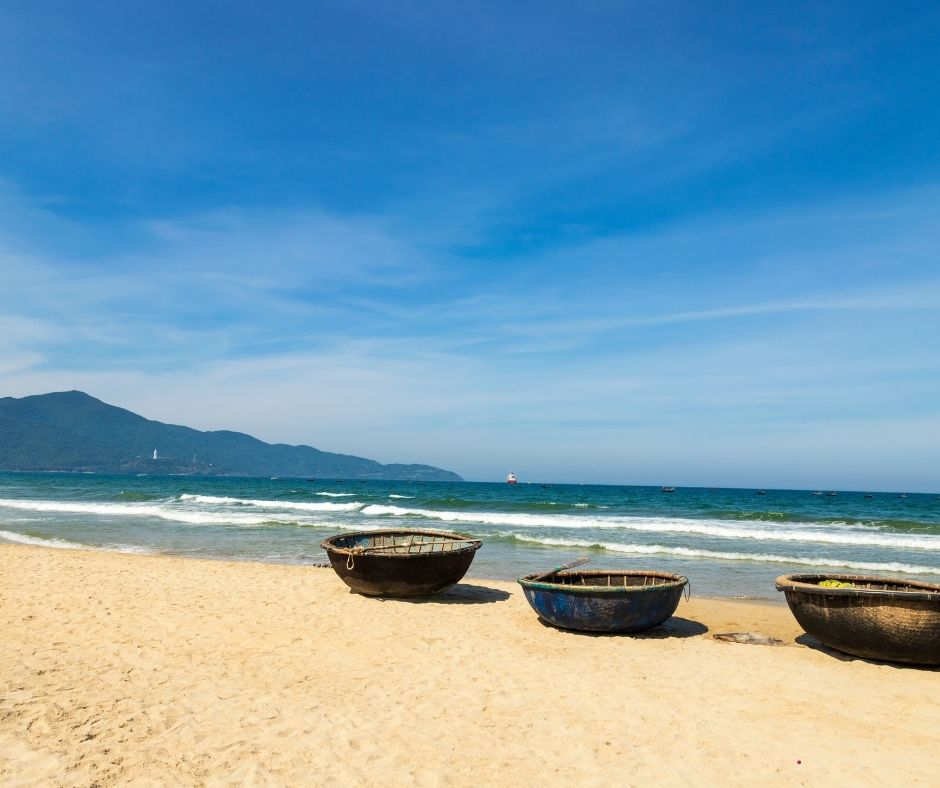
My Khe Beach is the best-known stretch of sand in Da Nang and one of the easiest places to experience the city’s coastal lifestyle.
The broad beachfront runs for kilometres along the eastern side of the city, backed by hotels, restaurants and cafés. Early morning and late afternoon are particularly lively, when local residents head to the sand to swim, exercise, play sports or simply enjoy the cooler temperatures.
During calmer weather, the sea is inviting for swimming, although conditions can change seasonally and visitors should always pay attention to local flags and lifeguard advice.
Neighbouring stretches such as My An, Pham Van Dong and Non Nuoc provide additional beach options along Da Nang’s extensive coastline.
Explore the Marble Mountains
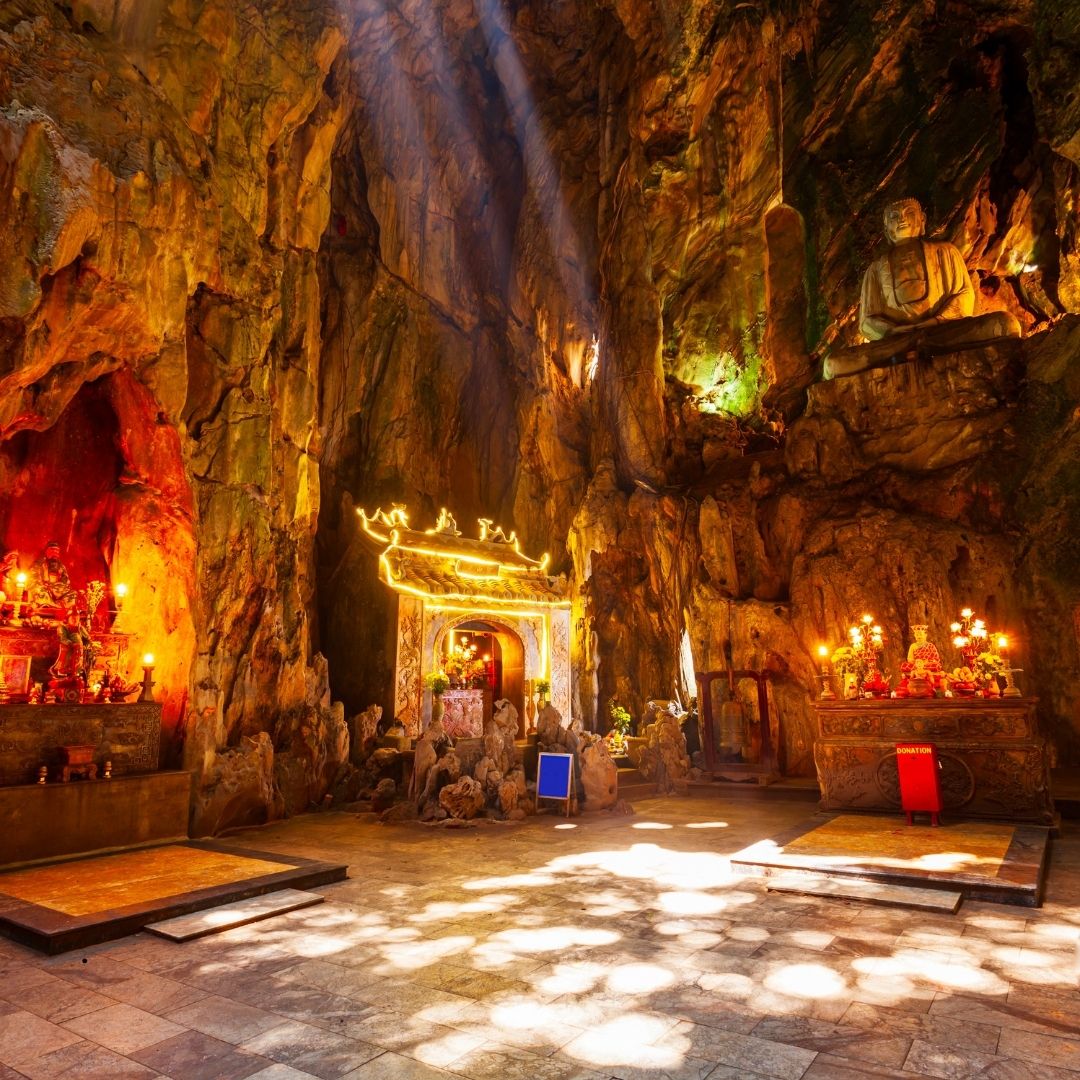
South of central Da Nang, the Marble Mountains — Ngu Hanh Son — are a group of five limestone and marble outcrops named after the traditional elements of water, wood, fire, earth and metal.
The most visited peak is Thuy Son, where steps and pathways connect Buddhist pagodas, viewpoints, caves and shrines. Some of the caves contain atmospheric religious sites illuminated by shafts of natural light from openings in the rock.
The Marble Mountains are only around seven kilometres from central Da Nang, making them an easy half-day excursion.
Go early if possible, as the combination of steep steps, humidity and midday heat can make exploring more demanding later in the day.
Visit Son Tra Peninsula
North-east of the city, the forested Son Tra Peninsula provides a striking natural backdrop to Da Nang.
Also known as Monkey Mountain, Son Tra is home to tropical forest, coastal viewpoints and wildlife including the endangered red-shanked douc langur.
One of its best-known landmarks is Linh Ung Pagoda, where the enormous white Lady Buddha statue overlooks the coastline and can be seen from parts of the city and beachfront.
The roads around Son Tra provide beautiful views, although access restrictions and traffic rules can apply on some routes. If you are not an experienced and appropriately licensed motorbike rider, travelling by car, taxi or organised tour is the safer option.
See Da Nang’s Dragon Bridge
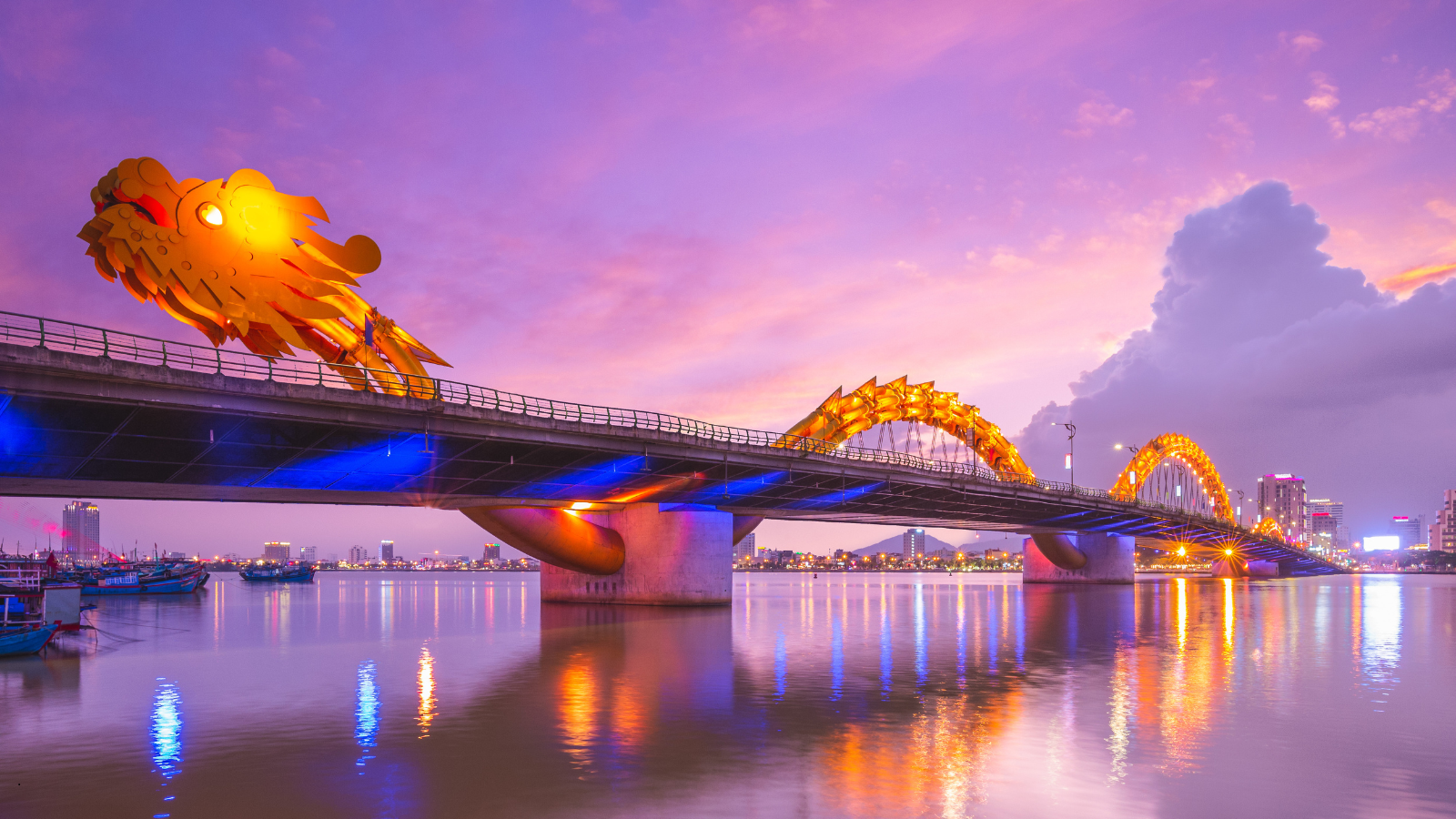
Spanning the Han River, the Dragon Bridge has become one of modern Da Nang’s most recognisable landmarks.
The bridge is designed in the shape of a dragon and is illuminated at night, adding to the lively atmosphere around the riverfront.
At weekends, the dragon is known for its evening fire-and-water display, which attracts crowds to the riverfront and surrounding cafés. Current Vietnam Tourism information lists the performance for Saturday and Sunday at 9pm, although it is sensible to check locally for schedule changes, public holidays or special events.
Spend a Day at Ba Na Hills
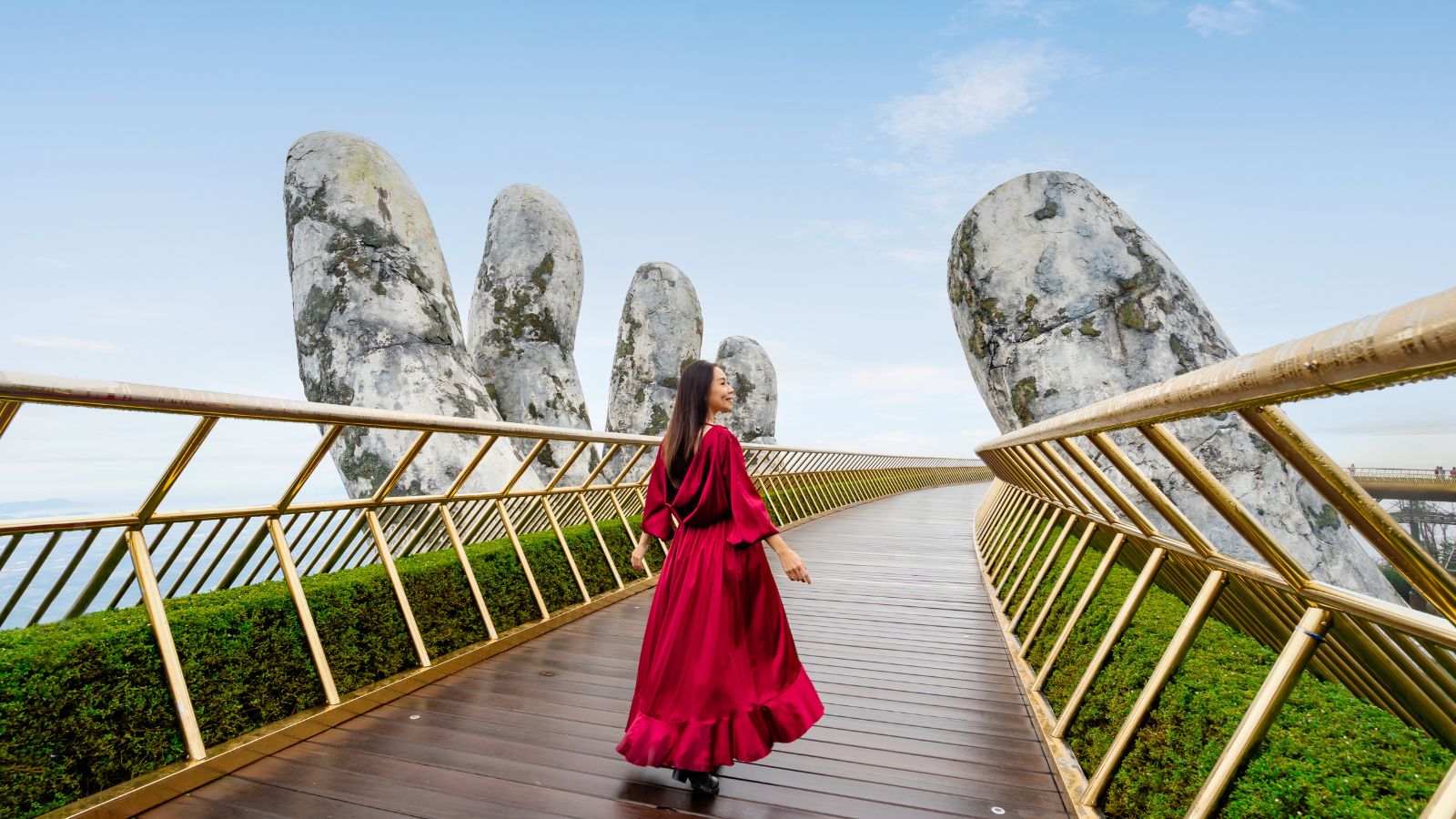
Around 30 kilometres west of Da Nang, Ba Na Hills is one of the region’s biggest visitor attractions.
Reached by cable car, the mountaintop resort and entertainment complex combines landscaped gardens, European-inspired architecture, attractions and cooler mountain temperatures.
Its most famous landmark is the Golden Bridge, a 150-metre pedestrian walkway appearing to rest in two enormous stone hands.
Ba Na Hills is very different from Da Nang’s more traditional cultural attractions and has the feel of a large themed resort, so it will appeal more to some travellers than others. Families and visitors looking for entertainment, mountain scenery and the famous bridge often dedicate most of a day to the trip.
Discover Cham History
Da Nang is also an excellent place to learn about the Cham civilisation, which once controlled much of Central Vietnam.
The Museum of Cham Sculpture houses an important collection of sculptures and artefacts from Cham archaeological sites across the region.
For travellers planning to visit My Son Sanctuary near Hoi An, seeing the museum first can provide useful historical context before exploring the temple ruins themselves.
Walk Along the Han River
The Han River gives central Da Nang much of its character.
Several bridges cross the river, while cafés, restaurants and riverside paths make the area pleasant to explore during the cooler evening hours.
After dark, the bridges and surrounding buildings are illuminated, creating a very different atmosphere from the beachfront.
The riverfront also provides easy access to central shops, markets and restaurants, making it a useful area to stay for travellers who want to experience more of the city itself rather than spending the entire trip beside the beach.
Experience Da Nang’s Markets
For a glimpse of everyday life, include one of Da Nang’s local markets during your stay.
Han Market is centrally located and popular with both local shoppers and visitors, selling food, clothing, dried goods and souvenirs.
Con Market is another good option, particularly for travellers interested in trying Vietnamese snacks and local dishes in a busy market environment.
Markets can become crowded, so keep an eye on personal belongings and carry smaller denominations of Vietnamese dong for inexpensive purchases.
What to Eat in Da Nang
Da Nang is a strong destination for travellers who organise at least part of their holiday around food.
Fresh seafood is particularly prominent along the coast, where restaurants display fish, shellfish and other catches for diners to choose from.
One regional speciality to look out for is mi Quang, a Central Vietnamese noodle dish commonly served with meat or seafood, herbs, peanuts and a small amount of richly flavoured broth.
Other dishes worth trying include:
- Banh xeo – crispy Vietnamese pancakes filled with ingredients such as pork, shrimp and bean sprouts
- Bun cha ca – noodles served with fish cake in a light broth
- Banh trang cuon thit heo – pork and fresh herbs wrapped in rice paper
- Seafood – grilled prawns, squid, clams, fish and crab are widely available around the beachfront
Da Nang also has an expanding café culture, so finding a Vietnamese coffee or contemporary speciality coffee shop is rarely difficult.
Take a Day Trip to Hoi An
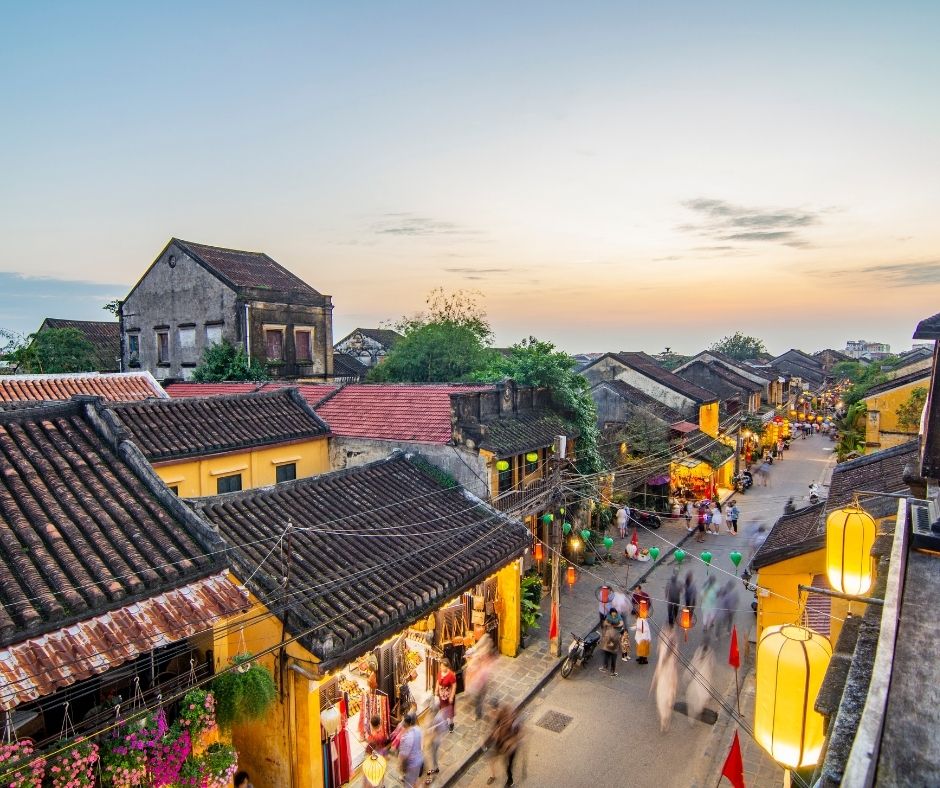
One of Da Nang’s biggest advantages is its proximity to Hoi An, making it easy to combine a beach stay with one of Vietnam’s most atmospheric heritage destinations.
The ancient town is roughly south of Da Nang and can usually be reached in around 45 minutes to an hour depending on traffic and where you are travelling from.
Hoi An is known for its yellow-painted historic buildings, lantern-lined streets, riverside setting, tailors and food scene.
Many travellers choose to stay in Da Nang and visit Hoi An for an afternoon and evening, while others split their accommodation between the two destinations.
Drive the Hai Van Pass
North of Da Nang, the Hai Van Pass winds through the mountains between Da Nang and the Hue region.
The road is famous for its sweeping coastal and mountain views and has become one of Vietnam’s best-known scenic drives.
You can experience the pass by private car, organised tour or motorbike. Again, travellers considering a motorbike should make sure they are properly licensed, experienced and covered by their travel insurance.
The pass can be combined with stops along the coast or incorporated into a longer journey between Da Nang and Hue.
Visit Hue
If your itinerary allows, Hue makes another excellent excursion or onward destination from Da Nang.
The former imperial capital is known for the UNESCO-listed Imperial City, royal tombs and historic pagodas.
Although it is possible to visit on a long day trip, staying overnight gives you considerably more time to explore.
Travelling between Da Nang and Hue via the Hai Van Pass also turns the transfer itself into part of the experience.
How Many Days Do You Need in Da Nang?
For most first-time visitors, three to four days provides a good introduction.
Three days allows time for the beach, Marble Mountains, Son Tra Peninsula and central Da Nang.
With four or five days, you can add Ba Na Hills or a day trip to Hoi An without rushing.
Travellers planning to use Da Nang as a base for wider exploration of Central Vietnam could comfortably stay a week, particularly if combining sightseeing with time on the beach.
Where to Stay in Da Nang
The best area depends on the type of trip you want.
My Khe and My An: Best for beach access, restaurants, cafés and a relaxed holiday atmosphere.
Han River / city centre: Convenient for markets, shopping, restaurants and exploring the urban side of Da Nang.
Non Nuoc: Popular with travellers looking for larger beachfront resorts and a quieter setting south of the main city beaches.
Son Tra: Useful for access to the peninsula and northern beaches, with a mixture of local neighbourhoods and visitor accommodation.
Da Nang has an extensive range of accommodation, from inexpensive guesthouses and apartments to international hotels and luxury beachfront resorts.
Getting Around Da Nang
Da Nang is relatively straightforward to navigate.
Grab and taxis are convenient for most journeys and are usually the easiest options for visitors.
Walking works well within individual neighbourhoods, but the city is spread out enough that you will probably need transport between the beach, city centre and attractions.
Motorbike rental is widely available, but travellers should check both Vietnamese licence requirements and the conditions of their travel insurance before riding.
For attractions farther outside the city, including Ba Na Hills, Hoi An and the Hai Van Pass, private drivers and organised tours are widely available.
Getting to Da Nang
Da Nang International Airport makes the city one of Central Vietnam’s main gateways.
It has frequent domestic connections with destinations including Hanoi and Ho Chi Minh City, as well as international services linking Da Nang with cities elsewhere in Asia.
The airport is close to the city centre, meaning transfers to central Da Nang and the main beach districts are relatively quick compared with many major holiday destinations.
Da Nang is also on Vietnam’s main north-south railway, making train travel possible from destinations such as Hue, Hanoi and Ho Chi Minh City.
Long-distance coaches and private transfers connect Da Nang with Hoi An and other destinations across Central Vietnam.
Best Time to Visit Da Nang
Da Nang has a tropical climate, but weather patterns differ from those in southern Vietnam.
For beach-focused trips, roughly March through August generally offers plenty of warm weather, although June to August can become very hot.
Vietnam Tourism highlights March to May and September to October for pleasant warm conditions, while June to August typically has relatively little rain and calmer seas.
The wetter period generally develops later in the year, particularly from around October into December, although conditions vary and tropical weather is never completely predictable. Heavy rain and occasional storms can affect Central Vietnam during this period.
If your priority is swimming and beach time, checking the short-range weather forecast shortly before travelling is always worthwhile.
Practical Tips for Visiting Da Nang
- Carry Vietnamese dong for small restaurants, markets and street-food stalls.
- Use Grab or reputable taxis for straightforward city transport.
- Visit Marble Mountains early to avoid the strongest midday heat.
- Wear suitable footwear for the steps and uneven surfaces at Marble Mountains.
- Dress respectfully when visiting pagodas and religious sites.
- Check sea conditions before swimming, especially during wetter months.
- Carry sunscreen and drinking water when exploring outdoors.
- Check motorbike licence and insurance requirements before renting a scooter.
- Allow a full day for Ba Na Hills rather than trying to combine it with too many other attractions.
- Visit the beach early morning or late afternoon to see Da Nang at its most lively and local.
Is Da Nang Worth Visiting?
Definitely.
Da Nang sometimes gets treated simply as the airport gateway to Hoi An, but it deserves more than a quick transfer through the city.
Its combination of long beaches, good food, mountain scenery, modern city life and easy access to some of Central Vietnam’s biggest attractions makes it one of the most versatile destinations in the country.
You can relax beside the sea, explore Buddhist caves and pagodas, search for rare wildlife on a forested peninsula, cross one of Vietnam’s most dramatic mountain passes and still be back beside the Han River for dinner.
For travellers looking to combine beach time, sightseeing and easy access to Central Vietnam, Da Nang makes an excellent base.